

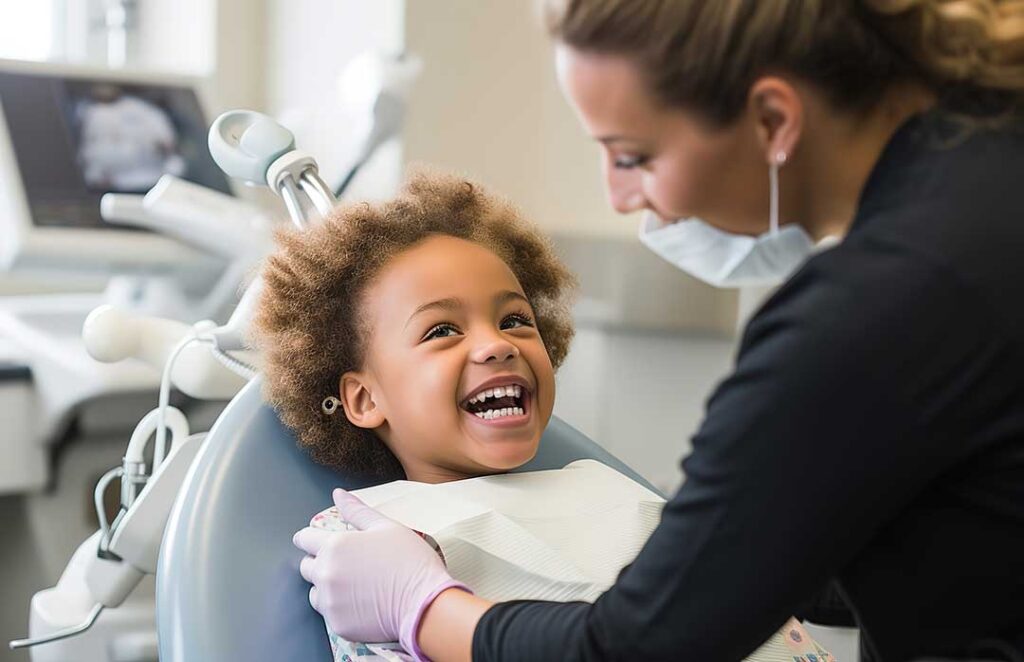
A child’s dental checkup is usually a preventive visit rather than a search for problems. The dental team checks the teeth, gums, bite, jaw development, and oral habits, then explains what can help protect the child’s smile between visits.
For families in Laguna Hills, a routine visit may also be a chance to discuss school schedules, sports, snacks, orthodontic concerns, and habits that affect oral health at home.
What happens before the examination?
The visit generally begins with questions about the child’s health and daily routine. Parents or caregivers may be asked about:
- Brushing and flossing habits
- Fluoride toothpaste and drinking-water sources
- Frequent snacks or sweetened beverages
- Tooth sensitivity, pain, bleeding, or mouth injuries
- Thumb-sucking, pacifier use, nail biting, or teeth grinding
- Medications, allergies, and medical conditions
- Previous dental treatment or anxiety about dental care
These questions help determine the child’s risk for tooth decay and other concerns. A child who brushes regularly may still have a higher risk if teeth are crowded, snacks are frequent, enamel is weak, or a dry mouth is caused by medication.
Infants and toddlers may sit in a caregiver’s lap during an examination. Older children may sit independently, although a parent can usually remain nearby if that helps the child feel secure.
What does the dentist examine?
The examination is designed to assess more than visible cavities. The dentist may look at:
- Each tooth for decay, enamel changes, cracks, or unusual wear
- The gums for swelling, redness, bleeding, or signs of inflammation
- The tongue, cheeks, palate, and other soft tissues
- The way the upper and lower teeth come together
- Spacing, crowding, and the eruption of permanent teeth
- Jaw movement and facial growth
- Oral habits that may influence tooth position or development
The dentist may use a small mirror, light, and gentle instruments. Children are often shown what the instruments do before the examination begins. This “tell-show-do” approach can make unfamiliar steps feel more predictable.
A normal checkup does not always involve polishing or a lengthy cleaning. The exact sequence depends on the child’s age, cooperation, oral hygiene, and level of risk.
Will the teeth be cleaned?
Many children receive a professional cleaning during a routine checkup, especially when plaque or hardened deposits are present. The hygienist or dental professional may gently brush or polish the teeth and clean along the gumline.
Cleaning does not replace brushing at home. It removes deposits that can be difficult to reach, while daily brushing and cleaning between teeth control plaque as it builds up.
Young children may not need a traditional cleaning at every visit. For infants and toddlers, the focus may be on examining the mouth, discussing feeding and brushing, and helping the family establish comfortable routines.
Is fluoride treatment part of a checkup?
A fluoride treatment may be recommended when it can reduce the child’s risk of tooth decay. Fluoride strengthens enamel and helps repair early mineral loss. The decision is based on factors such as age, cavity history, enamel condition, oral hygiene, diet, and exposure to fluoride from toothpaste and drinking water.
Parents may be shown how much fluoride toothpaste to use:
- A smear or rice-grain amount for children younger than 3
- A pea-sized amount for children ages 3 through 6
Children should spit out toothpaste after brushing but generally should not rinse repeatedly with large amounts of water. An adult should help or supervise brushing until the child can consistently clean all tooth surfaces.
Because household water sources can vary, including bottled, filtered, and tap water, families may be asked what a child usually drinks. Fluoride supplements should not be started without individualized guidance.
Are dental X-rays taken at every visit?
No. Dental X-rays are not automatically needed at every checkup. They are recommended only when the clinical examination, dental history, age, tooth development, symptoms, or risk level indicates that images could provide useful information.
X-rays may help detect decay between teeth, assess developing permanent teeth, evaluate an injury, or examine areas that cannot be seen directly. A child with pain, swelling, a history of trauma, or a higher risk of decay may need images sooner than a child with low risk and easily examined teeth.
Parents can ask what question an X-ray is intended to answer. Dental teams use child-sized positioning and protective measures, and the goal is to obtain only the images needed for diagnosis or treatment planning.
What preventive advice is usually discussed?
A checkup often includes practical guidance that changes as a child grows. Topics may include:
- Brushing twice daily with fluoride toothpaste
- Cleaning between teeth when contacts are tight
- Limiting frequent exposure to juice, soda, sports drinks, and sweet snacks
- Choosing water between meals
- Avoiding bedtime bottles or cups containing anything other than water
- Wearing a properly fitted mouthguard for activities with a risk of facial injury
- Managing thumb-sucking or pacifier use
- Watching for signs of teeth grinding or airway-related concerns
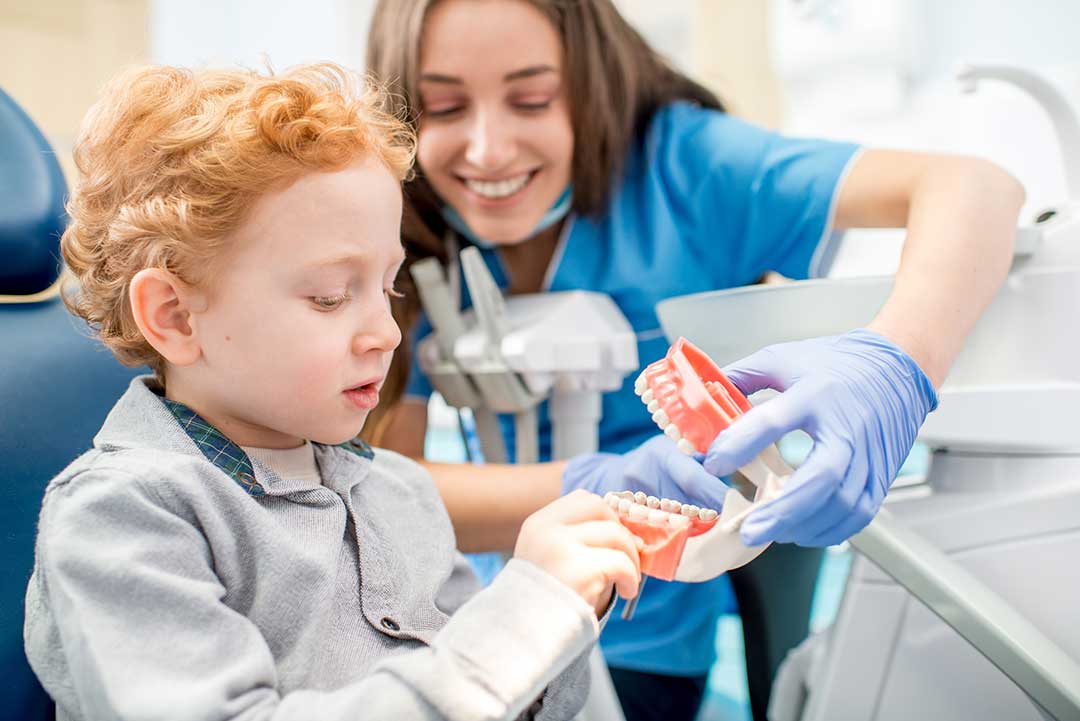
For local households with children involved in outdoor play and organized sports, questions about mouthguards and dental injuries may be especially relevant. A chipped or displaced tooth after a fall should be assessed promptly, even if the child seems comfortable.
When should a child start dental visits?
The first dental visit is recommended when the first tooth appears and no later than the first birthday. Early visits allow families to discuss brushing, feeding patterns, fluoride, teething, and the risk of early childhood tooth decay.
After that, visit frequency is individualized. Many children have checkups about every six months, but some need more frequent monitoring because of previous cavities, enamel defects, orthodontic development, medical conditions, or difficulty maintaining oral hygiene.
A child who has no pain can still have dental disease. Early decay may not cause noticeable symptoms, which is why preventive examinations matter.
How can parents make the visit easier?
A calm, matter-of-fact approach usually works better than offering repeated reassurance that “it will not hurt.” Children may interpret that phrase as a warning that discomfort is expected.
Before the visit, parents can:
- Use simple language such as “The dentist will count and check your teeth.”
- Avoid sharing frightening dental stories.
- Bring a comfort item for a younger child.
- Give the dental team information about sensory needs, anxiety, or communication preferences.
- Keep explanations honest but brief.
- Avoid using the visit as a threat or reward.
A child may cry, refuse to open their mouth, or need more than one visit to become comfortable. That does not automatically mean the examination failed. Building familiarity can be part of preventive care, particularly for toddlers and children with developmental or sensory differences.
What should parents ask before leaving?
Before the checkup ends, parents should understand whether the child has signs of decay, how well the teeth and gums appear to be developing, and what changes are recommended at home. Useful questions include:
- Does my child have a higher-than-average risk of cavities?
- Were all areas of the mouth visible during the examination?
- Were X-rays recommended, and what would they show?
- Is fluoride treatment appropriate?
- Are the brushing and flossing routines effective?
- Are thumb-sucking, grinding, crowding, or delayed tooth eruption concerns?
- What symptoms would require earlier evaluation?
A routine checkup should leave the family with a clear picture of the child’s current oral health and a practical plan for the months ahead.