

Toddlers rarely brush perfectly on their own. Effective brushing at this age depends on a small, soft toothbrush, a very limited amount of fluoride toothpaste, and consistent adult help.
For families in Laguna Hills, CA, toothbrushing is especially useful as part of a predictable morning-and-bedtime routine. Busy household schedules, shared bedrooms, travel, and warm weather can all make routines less consistent, so a simple approach is easier to maintain.
When should toothbrushing begin?
Brushing should begin as soon as the first tooth appears, usually around 6 months, although timing varies. Before teeth erupt, caregivers can gently wipe the gums with a clean, damp cloth or use a soft infant toothbrush and water.
Once teeth are visible, brush twice each day—after breakfast or in the morning, and again before bed. Bedtime brushing is particularly important because food, milk, or sweet drinks left on the teeth overnight can contribute to decay. The American Academy of Pediatric Dentistry recommends cleaning a child’s teeth no later than the eruption of the first primary tooth. ([aapd.org](https://www.aapd.org/research/oral-health-policies–recommendations/use-of-fluoride/?utm_source=openai))
A first dental visit should occur by the first birthday, even if the teeth appear healthy. Early visits can help caregivers understand fluoride needs, feeding habits, and brushing techniques before small problems become painful. ([cdc.gov](https://www.cdc.gov/oral-health/prevention/oral-health-tips-for-children.html?utm_source=openai))
How much toothpaste should a toddler use?
The amount matters more than many caregivers realize.
- From the first tooth until age 3: use a smear of fluoride toothpaste about the size of a grain of rice.
- From age 3 through age 6: use no more than a pea-sized amount.
Fluoride toothpaste helps strengthen enamel and reduce the risk of cavities, but toddlers often swallow toothpaste rather than spit it out. Using only the recommended amount provides cavity protection while limiting unnecessary fluoride ingestion. An adult should place the toothpaste on the brush instead of allowing the child to squeeze it independently. ([ada.org](https://www.ada.org/resources/ada-library/oral-health-topics/toothbrushes?utm_source=openai))
Guidance for children younger than 2 can vary according to cavity risk, drinking water, and medical history. Caregivers should follow the child’s dentist or physician’s advice if it differs from general recommendations.
What toothbrush works best?
Choose a toothbrush with:
- A small head that fits comfortably in the child’s mouth
- Soft bristles
- A handle that an adult can hold securely
- No sharp or rough edges
A child does not need a large brush or firm bristles to clean effectively. Hard bristles and aggressive scrubbing can irritate the gums. Replace the toothbrush when the bristles look bent, frayed, or worn, or after an illness if the brush is difficult to clean.
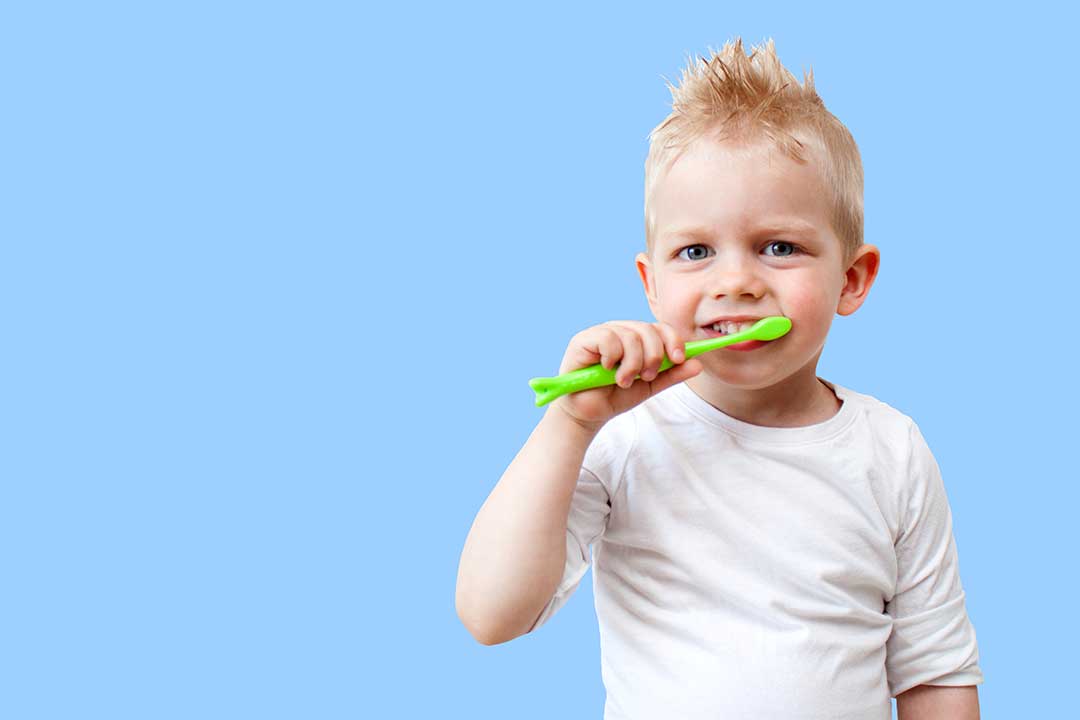
Toddlers may enjoy holding a second toothbrush while an adult performs the actual brushing. This gives them a sense of participation without relying on their still-developing coordination.
What is the most effective brushing position?
An adult usually has better visibility and control when brushing from behind the child. Try sitting the toddler on a lap with the child’s head resting against the adult’s chest, or stand behind the child in front of a mirror.
Lift the upper lip gently when needed so the brush can reach the gumline. Use small, gentle back-and-forth movements rather than fast, forceful scrubbing. Clean:
- The outside surfaces of all teeth
- The inside surfaces, including behind the front teeth
- The chewing surfaces of back teeth
- Along the gumline, where plaque often collects
The American Dental Association generally recommends angling the brush toward the gumline and using short, gentle strokes. For toddlers, reaching every surface calmly is more useful than insisting on a complicated technique. ([ada.org](https://www.ada.org/resources/ada-library/oral-health-topics/toothbrushes?utm_source=openai))
Should a toddler brush alone?
A toddler can practice, but an adult should finish the brushing. Young children often lack the hand control, attention span, and visual awareness needed to clean every surface. The Centers for Disease Control and Prevention advises caregivers to help children brush until they have good brushing skills and to supervise children under age 6. ([cdc.gov](https://www.cdc.gov/oral-health/prevention/oral-health-tips-for-children.html?utm_source=openai))
A practical routine is:
1. Let the child brush first for a short turn.
2. Explain that the adult gets a “turn to check.”
3. Brush all surfaces carefully.
4. Encourage spitting without making rinsing a major task.
If a child cannot spit reliably, avoid giving a large drink of water after brushing. Excessive rinsing can remove fluoride from the teeth. The priority is to use a small amount of toothpaste and prevent the child from eating it directly from the tube.
What can make brushing easier for a resistant toddler?
Resistance is common and does not necessarily mean the routine is failing. Toddlers often object because they want control, dislike the sensation, or are tired at bedtime.
Helpful strategies include:
- Offer two acceptable choices, such as brushing before or after pajamas.
- Use the same short song or counting routine each time.
- Brush in front of a mirror so the child can see what is happening.
- Use simple language, such as “top teeth, bottom teeth, back teeth.”
- Keep the brush moving calmly rather than negotiating for a long time.
- Praise cooperation specifically: “You opened wide” is more useful than general praise.
- Keep the routine consistent across caregivers and households.
If the child is overtired, brushing earlier in the bedtime routine may work better than waiting until the final moment. During warmer months, some children drink more frequently. Water between meals is less likely to contribute to decay than repeated sipping of sweetened beverages.
Do toddlers need flossing?
Flossing is needed when two teeth touch and a toothbrush cannot clean between them. If there are visible spaces between all teeth, flossing may not yet be necessary. When teeth are tight together, clean between them once daily with floss or an age-appropriate interdental tool.
Adults should perform the flossing because toddlers cannot guide floss safely or accurately. Bleeding gums can occur when plaque has been present for a while, but persistent bleeding, swelling, soreness, or bad breath deserves individual dental guidance.
Are there brushing mistakes to avoid?
Several common habits can reduce the benefit of brushing:
- Using a full strip of toothpaste
- Allowing a toddler to brush without an adult finishing
- Scrubbing forcefully
- Skipping the nighttime brushing
- Giving juice, sweetened drinks, or milk after brushing and before sleep
- Sharing utensils or cleaning a dropped pacifier with an adult’s mouth
- Assuming baby teeth do not matter because they eventually fall out
Primary teeth help children eat, speak, and maintain space for developing permanent teeth. Cavities in baby teeth can cause pain and infection, so prevention should begin early. Drinking fluoridated tap water where appropriate and brushing twice daily with fluoride toothpaste are established cavity-prevention measures. Water fluoride levels and a child’s overall fluoride exposure should be considered together rather than supplemented independently. ([cdc.gov](https://www.cdc.gov/oral-health/prevention/oral-health-tips-for-children.html?utm_source=openai))
When does brushing become the child’s responsibility?
Children gradually develop the coordination needed to brush more independently, but many still need supervision well beyond the toddler years. Independence should be based on demonstrated skill, not simply age.
A child is more ready when they can consistently reach the back teeth, brush both sides of the mouth, spit out toothpaste, and follow the routine without rushing. Until then, adult assistance remains the most dependable way to keep plaque from accumulating.
For area households, the most reliable plan is straightforward: use a small soft brush, apply the correct amount of fluoride toothpaste, brush twice daily, and let an adult complete the job.