

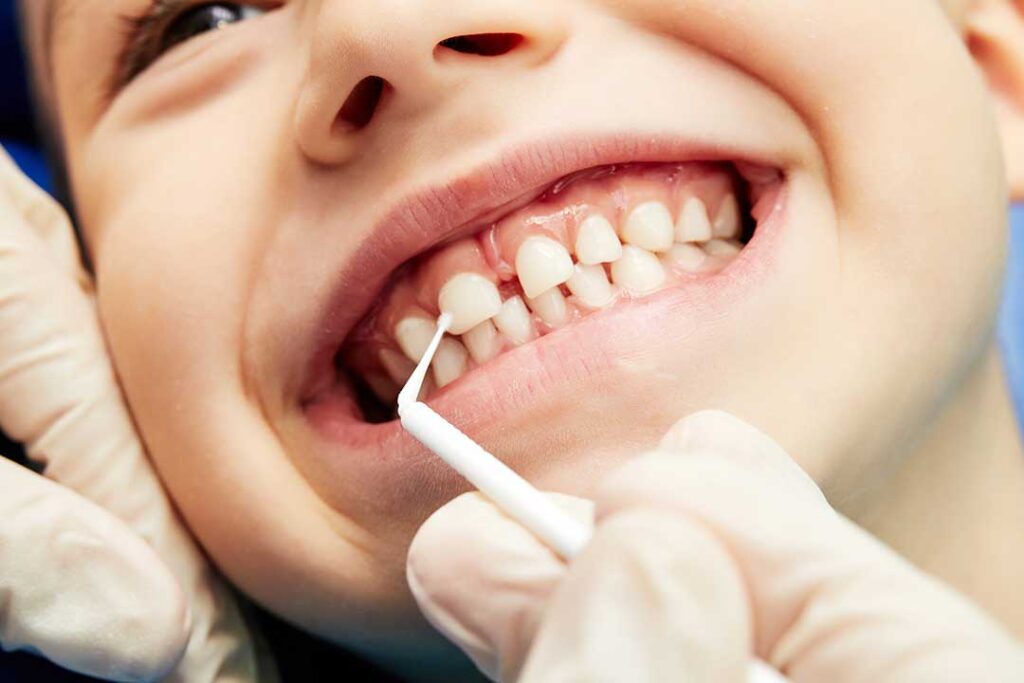
Fluoride is a naturally occurring mineral that helps children’s teeth resist decay and repair early damage. For families in Laguna Hills, understanding where fluoride comes from, how much children need, and how to avoid unnecessary exposure can make daily dental care more effective.
What does fluoride do for children’s teeth?
Fluoride strengthens tooth enamel, the hard outer layer of each tooth. It also helps reverse the earliest stages of tooth decay before a cavity forms.
Children benefit from fluoride in two main ways:
- Topical fluoride works directly on the tooth surface through toothpaste, drinking water, mouth rinses, and professional treatments.
- Systemic fluoride is swallowed and becomes part of the developing tooth structure. Drinking water and, in some cases, prescribed supplements provide systemic exposure.
Fluoride also reduces the ability of cavity-causing bacteria to produce acids. This matters because children’s teeth are exposed to frequent snacks, sweetened drinks, and other conditions that can encourage decay.
Fluoride does not replace brushing, flossing, or healthy eating. It works as one part of a broader approach to preventing cavities.
How should children use fluoride toothpaste?
Children should generally brush twice daily with fluoride toothpaste, using an amount appropriate for their age.
- Younger than 3 years: Use a thin smear, about the size of a grain of rice.
- Ages 3 through 6: Use no more than a pea-sized amount.
- Older children: A small amount is usually sufficient, with an adult checking that brushing is thorough.
An adult should place the toothpaste on the toothbrush for young children and supervise brushing for children who may swallow it. Children should spit out the toothpaste after brushing. Rinsing repeatedly with water can wash away some of the fluoride that would otherwise remain on the teeth, so a small amount of water or no rinsing may be preferable if the child can manage it safely.
Children do not need to use large amounts of toothpaste to receive fluoride’s protective effect. More toothpaste does not mean better protection.
Is fluoride in drinking water important?
Yes. Fluoridated drinking water provides frequent, low-level contact with fluoride throughout the day. This can support cavity prevention between brushing sessions.
The recommended community water fluoride concentration in the United States is approximately 0.7 milligrams per liter, also described as 0.7 parts per million. However, water supplies and fluoride levels can vary by service area. In Laguna Hills, households may receive water from different systems depending on the neighborhood, so the most accurate information comes from the household’s current water quality report or water provider.
This is particularly useful for families who:
- Use bottled or filtered water most of the time
- Prepare powdered or concentrated infant formula
- Live in a home with a private well
- Have recently moved into the area
- Are considering fluoride supplements for a child
Many home filtration systems improve taste or remove certain substances but do not necessarily remove fluoride. Families should check the specific filter technology rather than assume that filtered water contains no fluoride.
Does bottled water contain fluoride?
Sometimes, but not always. Bottled water may contain very little fluoride, and the amount is not always obvious from the front label. Children who drink mostly bottled water may receive less fluoride than children who regularly drink optimally fluoridated tap water.
This does not mean bottled water is unsafe. It means the fluoride content may be relevant when evaluating a child’s overall cavity-prevention plan. Families can review the product label or ask the manufacturer for fluoride information.
For infants who rely heavily on powdered formula, the water used for mixing can affect fluoride exposure. Parents should avoid making changes based on general advice alone because feeding patterns, the child’s age, and the local water supply all matter.
What is dental fluorosis?
Dental fluorosis is a change in the appearance of developing permanent teeth caused by taking in too much fluoride while those teeth are forming beneath the gums. Mild fluorosis may appear as faint white lines or spots. It usually does not cause pain or weaken the teeth.
The risk is greatest during early childhood, generally before age 8. The main prevention step is supervising how much fluoride toothpaste a child uses and discouraging swallowing toothpaste.
Dental fluorosis is different from tooth decay. Fluorosis is related to tooth development, while decay results from acids produced by bacteria. White spots can have several causes, so appearance alone cannot always identify the problem.
Are fluoride treatments at the dental office necessary for every child?
Not every child has the same fluoride needs. A fluoride varnish or other professionally applied treatment may be useful for children with a higher risk of cavities, including those who have:
- A history of cavities
- Frequent exposure to sugary or acidic drinks
- Enamel defects or developmental concerns
- Orthodontic appliances
- Dry mouth caused by medication or medical conditions
- Difficulty brushing effectively
- Limited access to fluoridated water

Fluoride varnish is painted onto the teeth and is designed to remain in contact with enamel for a period of time. It is used in very small amounts and is commonly recommended for children who may benefit from additional protection.
A child at low risk may need only regular fluoride toothpaste and routine preventive care. A child with active or recurring decay may need a more individualized plan. Fluoride recommendations should account for toothpaste, drinking water, foods, beverages, supplements, and any treatments used at home or in a dental setting.
Should children take fluoride supplements?
Fluoride supplements should not be started without guidance from a dentist or pediatrician. They may be considered for certain children whose primary drinking water contains insufficient fluoride and who have an elevated risk of tooth decay.
Before a supplement is recommended, the child’s total fluoride exposure should be reviewed. This includes:
- The fluoride level in household drinking water
- Use of bottled or filtered water
- Fluoride toothpaste
- Infant formula preparation
- Fluoride-containing mouth rinses or gels
- The child’s age and cavity risk
Taking supplements when they are not needed can increase the chance of excessive fluoride intake without providing additional benefit.
What practical steps can Laguna Hills families take?
A simple routine can provide dependable protection:
- Brush twice daily with the correct amount of fluoride toothpaste.
- Help young children brush rather than expecting them to clean every surface independently.
- Offer water instead of juice, soda, sports drinks, or sweetened beverages.
- Limit frequent grazing on sticky or sugary foods.
- Check the household water source and current fluoride information.
- Mention extensive bottled-water use during a child’s dental or medical visit.
- Keep prescription fluoride products and toothpaste out of young children’s reach.
- Seek guidance promptly if a child has tooth pain, visible cavities, unusual white or brown spots, or repeated dental problems.
Warm, dry conditions can make water bottles a regular part of family routines, especially during outdoor activities. Refillable bottles filled with safe tap water can help children stay hydrated while also providing the fluoride exposure available in the household water supply.
Used in the right amount, fluoride is a well-established tool for protecting children’s teeth. The goal is not to maximize fluoride exposure, but to combine appropriate fluoride use with effective brushing, regular water consumption, nutritious meals, and attentive supervision during the years when children are learning to care for their teeth.