


Baby teeth are more than temporary placeholders. They help children eat, speak, sleep comfortably, and develop healthy habits while guiding the position of adult teeth. Protecting them from decay and injury supports a child’s oral health during the early years and can influence dental development well into the future.
What do baby teeth do?
Baby teeth help children chew food effectively, pronounce sounds clearly, and maintain normal spacing in the jaws. They also support facial growth and help children become comfortable with daily brushing and other oral hygiene routines.
Most children have 20 primary teeth. The first teeth often appear around six months of age, although normal timing varies. By about age three, many children have most or all of their primary teeth. These teeth remain in place until adult teeth gradually push them out, usually beginning around age six.
A baby tooth may look small, but it has a meaningful job during the years when a child’s mouth, speech, eating patterns, and self-care skills are developing.
How do baby teeth guide adult teeth?
Primary teeth help preserve space for permanent teeth developing beneath the gums. Their roots and position help guide adult teeth toward the correct location as they emerge.
If a baby tooth is lost too early because of untreated decay, infection, or injury, nearby teeth can drift into the open space. That may leave less room for the permanent tooth later. In some situations, early tooth loss can contribute to crowding, delayed eruption, or changes in how the upper and lower teeth meet.
This does not mean every child who loses a baby tooth early will develop an orthodontic problem. The effect depends on which tooth was lost, the child’s age, the developing adult tooth, and the amount of remaining space. However, early loss deserves attention rather than being dismissed as harmless.
Can cavities in baby teeth affect adult teeth?
Yes. Untreated decay in a primary tooth can cause pain, infection, difficulty eating, and missed sleep. In some cases, infection near the developing permanent tooth may affect its enamel or eruption path.
Young children may not always describe dental pain clearly. Instead, caregivers might notice:
- Avoiding certain foods or chewing on one side
- Irritability during meals or bedtime
- Sensitivity to cold, hot, or sweet foods
- Swelling near the gums or face
- A dark, white, or brown spot on a tooth
- Bad breath that persists despite brushing
- Difficulty sleeping or waking during the night
A child with facial swelling, fever, trouble swallowing, or difficulty breathing needs prompt medical and dental attention because those symptoms can signal a spreading infection.
Why do baby teeth matter for speech and eating?
Children use their front teeth, back teeth, tongue, lips, and jaw together to form sounds and manage food. Missing or painful teeth can make biting, chewing, or pronouncing certain sounds more difficult.
A child who avoids chewing because of discomfort may favor soft foods or swallow food without adequately breaking it down. Persistent oral pain can also affect mood, concentration, and participation in school or family activities.
For families in Laguna Hills, everyday routines may include school, childcare, sports, and outdoor activities in warm, dry conditions. Keeping children hydrated is useful, but frequent sipping of sweetened drinks or sports beverages can expose teeth to repeated acid and sugar. Plain water between meals is generally kinder to developing teeth.
When should children begin dental care?
Oral care begins before the first tooth appears. A clean, damp cloth can gently wipe an infant’s gums after feeding. Once the first tooth emerges, brushing should begin with a soft, child-sized toothbrush and a small amount of fluoride toothpaste.
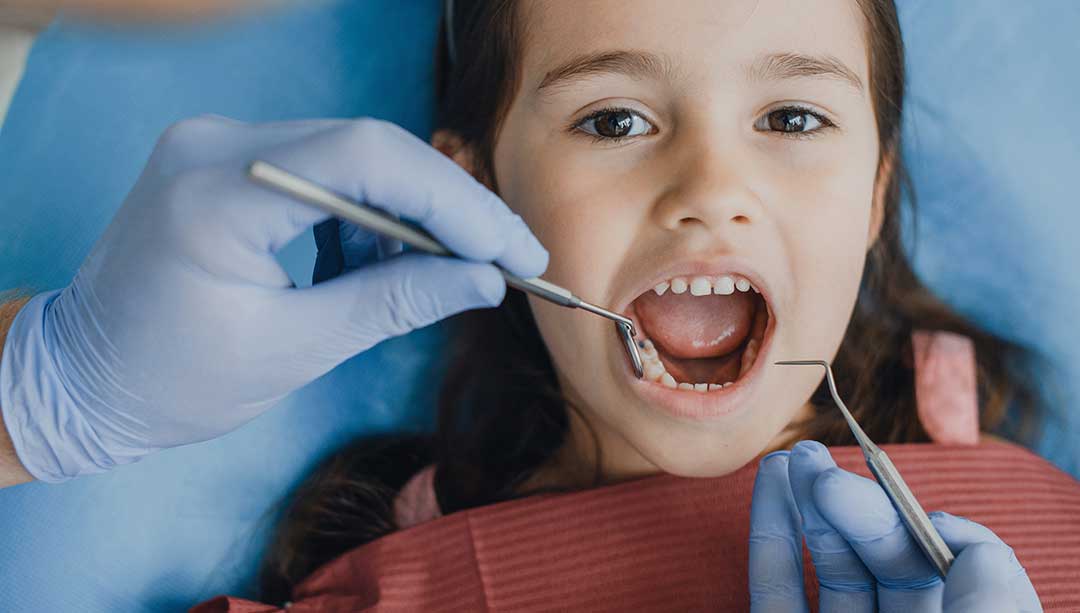
A first dental visit is generally recommended by the child’s first birthday or within six months of the first tooth appearing. Early visits allow caregivers to discuss brushing, fluoride exposure, snacks, pacifiers, thumb-sucking, and injury prevention before problems become more serious.
These visits are not only about finding cavities. They also help monitor tooth development, jaw growth, eruption patterns, and habits that may affect the bite.
How much toothpaste should a child use?
The amount should match the child’s age and ability to spit:
- Children younger than age three generally need a smear or rice-sized amount of fluoride toothpaste.
- Children ages three through six generally use a pea-sized amount.
- An adult should help or supervise brushing until the child can reliably clean all tooth surfaces and avoid swallowing toothpaste.
Brushing should occur twice daily, especially before bed. The nighttime brushing is particularly important because saliva flow decreases during sleep, reducing the mouth’s natural ability to clear acids and food particles.
Flossing becomes useful when teeth touch each other and a toothbrush can no longer clean between them. A caregiver usually needs to perform or closely assist with flossing in young children.
Are baby-bottle cavities and frequent snacking still concerns?
Yes. Teeth can develop decay when they are repeatedly exposed to milk, formula, juice, sweetened drinks, sticky foods, or other carbohydrates. The risk increases when these exposures happen often throughout the day or continue during sleep.
To reduce risk:
- Avoid putting a child to bed with a bottle containing milk, formula, juice, or another sweet drink.
- Do not dip pacifiers in sugar or syrup.
- Offer water between meals when appropriate.
- Keep snacks structured rather than allowing frequent grazing.
- Include tooth-friendly foods such as vegetables, cheese, plain yogurt, and other balanced choices.
- Brush twice daily with fluoride toothpaste.
Breast milk and formula provide important nutrition, but teeth still need cleaning once they erupt. The frequency and duration of feeding, especially overnight, can affect cavity risk.
What should parents do after a dental injury?
A chipped or knocked-out baby tooth should not be ignored, even if the child seems comfortable. Rinse the mouth gently with water and look for bleeding, swelling, or damage to nearby teeth. Do not try to place a knocked-out baby tooth back into the socket, because doing so may harm the developing adult tooth.
A permanent tooth that is knocked out is handled differently and requires urgent care. Because it can be difficult to tell whether a tooth is primary or permanent, prompt evaluation is appropriate after a significant mouth injury.
Children participating in playground activities, cycling, skating, swimming, or contact sports may benefit from properly fitted mouth protection. Helmets and other safety equipment also reduce the risk of facial injuries.
Which habits can affect long-term oral development?
Thumb-sucking and pacifier use are common in infancy and early childhood. They are not automatically harmful, but prolonged or intense habits may influence the position of the front teeth and the shape of the developing bite.
Other factors worth watching include mouth breathing, teeth grinding, and regularly sleeping with the mouth open. These signs can have many possible causes, including nasal congestion or airway concerns, and should be discussed with a child’s healthcare team if they persist.
The goal is not to create anxiety about normal childhood behaviors. It is to notice patterns early enough that guidance can be individualized.
Healthy baby teeth give children a functional, comfortable foundation while adult teeth develop. Consistent brushing, sensible drink and snack routines, protection from injury, and timely attention to pain or swelling help preserve that foundation through the years when it matters most.